

Yoga Practice (Warm-Up):
Shoulder Rolls
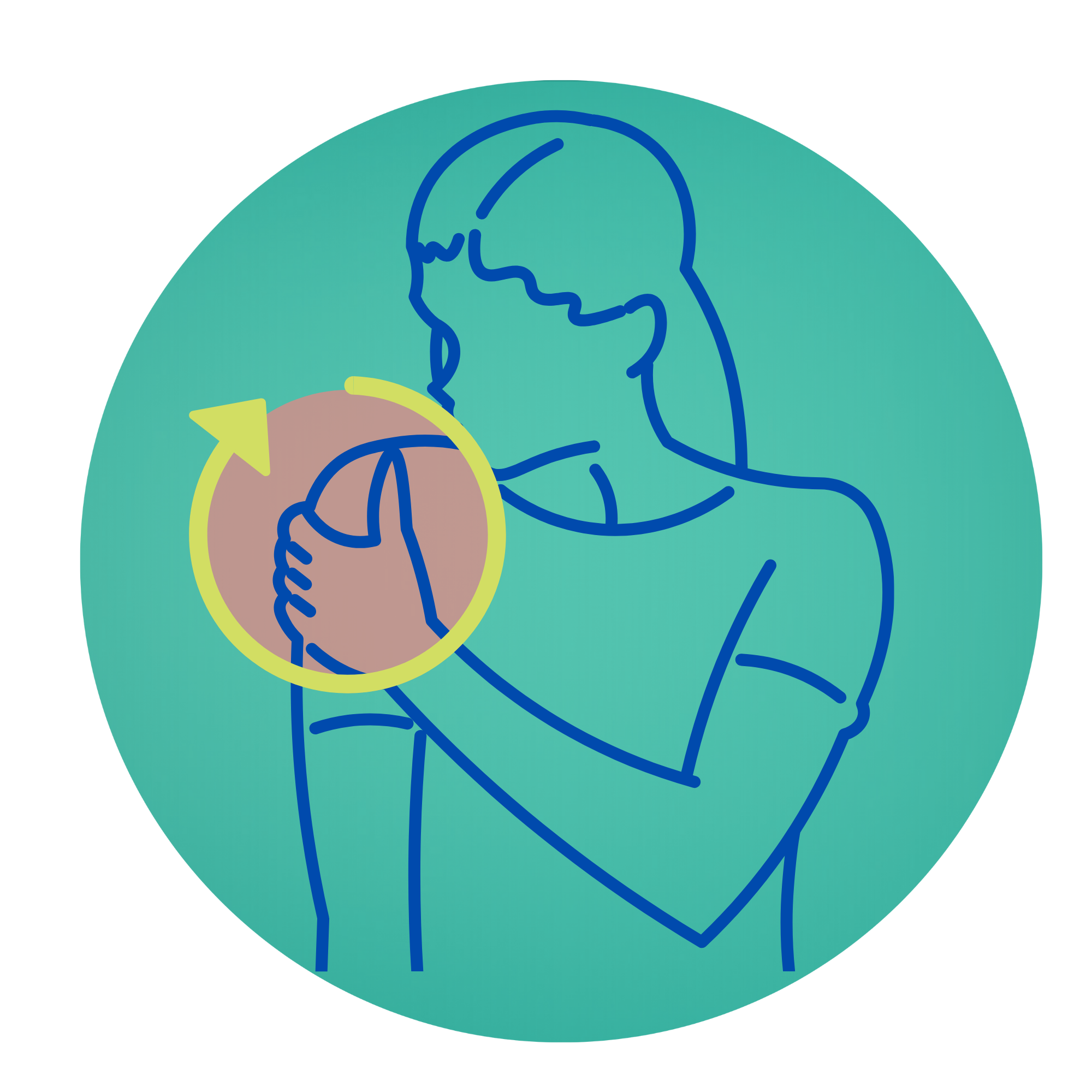
Shoulder Rolls
Shoulder Rolls are a yoga warm up that help to mobilize the shoulder girdle and engages and releases shoulder, chest, and upper-body musculature.

Releases tension in the shoulders and upper back
Increases shoulder mobility and range of motion
Helps prepare the body for sitting, learning, or activity
Supports body awareness and mindful movement
Encourages calm, steady breathing
Instructions:
From a seated or standing position, with an inhale, draw the shoulders forward, then up toward the ears. On an exhale, bring them backward and then down to where you began.
Repeat several times, gradually adjusting and expanding to explore your range of comfort. Then reverse direction.
Sit or stand tall.
Let your arms relax by your sides.
Lift your shoulders.
Slowly bring your shoulders up toward your ears.
Roll them back.
Gently roll your shoulders down and back in a circle.
Switch directions.
Roll your shoulders the other way, then pause and notice how they feel.

Teaching Cues for Students
Implementation & Development
See our Child Development Page for more information to help tailor your instruction to best meet the needs of your students.
All children learn best given clear, concise, instructions, trying to reduce directional cues down to 4 steps.
Enjoys learning through games, songs, and stories. Cues for Balloon Breath can be incorporated into a song or a rhyme to make it more playful.
Focus: play, relaxation, simple coordination
Use big, slow modeling with relaxed arms.
Cue imagery:
“Shrug up like a turtle”
“Melt your shoulders like ice cream”
Keep circles small and gentle.
Count together (3–4 rolls each direction).
Invite kids to notice when shoulders “drop down.”
Let children sit or stand; both are okay.
End with a pause and a “wiggle and relax.”
Still enjoy routine, learning through games, group activity. Appreciates praise and being noticed. Slightly longer attention spans, may be able to take in more instructions and longer practices.
Focus: body awareness, posture, control
Cue posture first: “Sit or stand tall.”
Emphasize slow, smooth circles, not speed.
Encourage releasing tension on the downward roll.
Use directional language (up–back–down–forward).
Invite noticing differences between directions.
Pause briefly at the end to sense relaxation or warmth.
As adolescence begins and continues, students will start to feel preoccupied with body image. It is important to cultivate a safe space for students to practice where they don’t feel singled out and they have the option to close their eyes or to soften their gaze.
Focus: stress release, autonomy, nervous-system regulation
Frame shoulder rolls as a stress or screen-break reset.
Encourage subtle movement; bigger is not better.
Pair with breath if helpful (exhale on the roll down).
Normalize choice to keep eyes open, sit, stand, or skip.
Invite reflection: “Do your shoulders feel heavier or lighter?”


Helpful Hints
For a challenge to coordination and body awareness, try rolling shoulders in opposite directions simultaneously.
Never overdo or force any yoga movement. If you begin to experience discomfort or pain, release the posture. Find a variation of the posture that serves your body and practice best.
Practice with self-compassion and non-judgement.
Shoulder Rolls can be done standing, sitting in a chair.
Universal Best Practices
Movements are slow, circular, and pain-free.
Avoid forcing or exaggerated shrugging.
Arms stay relaxed; movement comes from shoulders only.
Offer rest or stillness as valid options.
End with a pause to notice ease or change.
Content from NYCDOE YMTP² curricular materials