

Yoga Practice (Warm-Up):
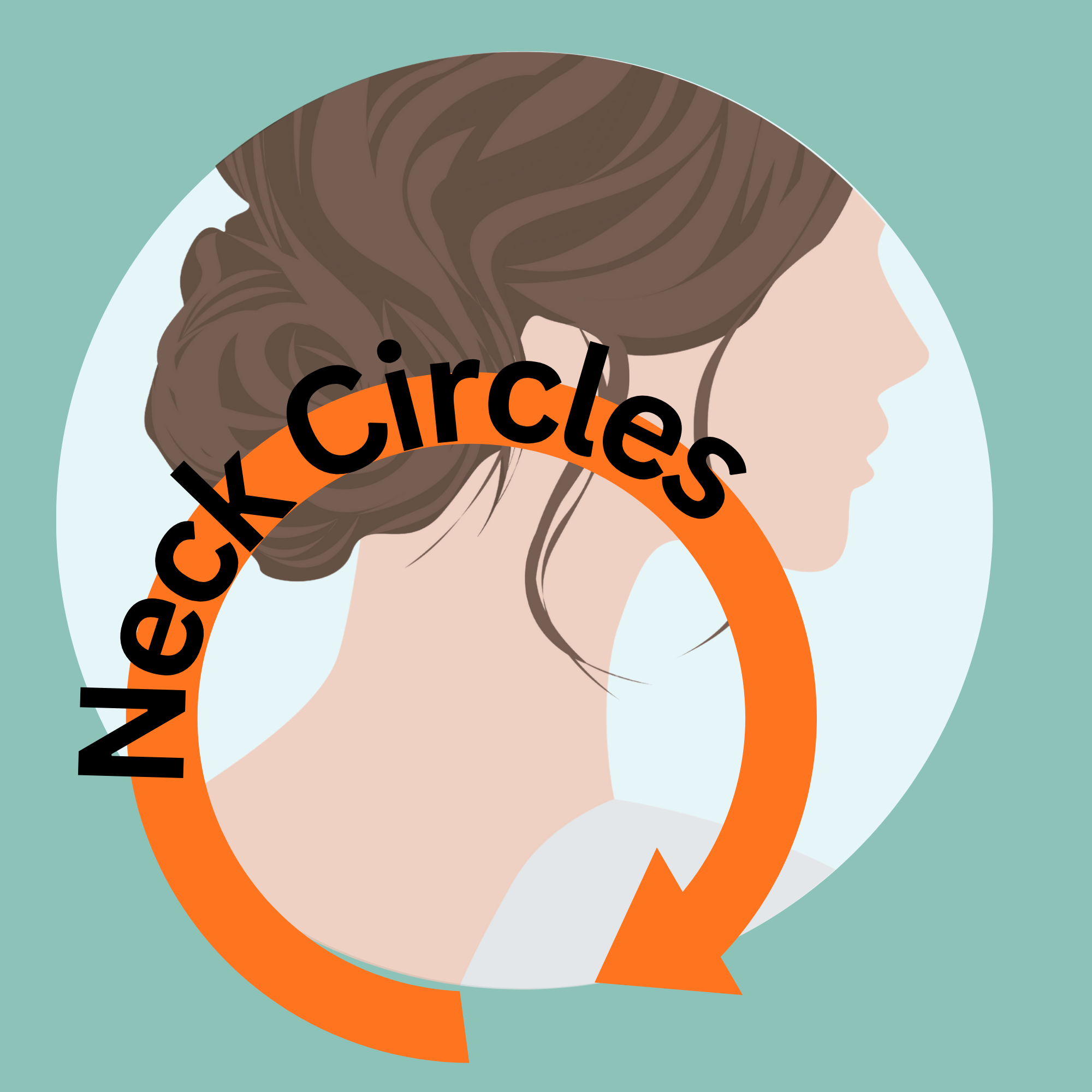
Neck Circles
Neck Circles
Neck Circles are a yoga warm up that help to mobilize joints of the cervical spine through flexion, extension, and lateral extension.

Releases tension in the neck and shoulders
Increases gentle neck mobility
Supports body awareness and mindfulness
Encourages slow, calm movement
Helps prepare the body for learning or activity
Instructions:
From a seated or standing position, let your chin drop toward your chest, maintaining neutral curves through the middle and lower back.
With an inhale, roll your right ear toward your right shoulder. With an exhale, roll your chin back to your chest.
Switch sides, and then repeat several times. Alternating from one side to the other and back again.
Sit or stand tall.
Let your shoulders relax and take a slow breath.
Move slowly.
Gently roll your head in a small circle.
Switch directions.
Roll your head the other way, nice and easy.
Pause and notice.
Stop, lift your head back to center, and notice how your neck feels.
Teaching Cues for Students
Implementation & Development
See our Child Development Page for more information to help tailor your instruction to best meet the needs of your students.
All children learn best given clear, concise, instructions, trying to reduce directional cues down to 4 steps.
Enjoys learning through games, songs, and stories. Cues for Balloon Breath can be incorporated into a song or a rhyme to make it more playful.
Focus: safety, simplicity, imagination
Use very small movements; avoid full circles.
Cue “ear to shoulder” and “chin to chest” only.
Add imagery: “Nodding like a sleepy turtle” or “listening with your ear.”
Keep eyes open and movements slow and gentle.
Do 2–3 rounds total; stop before attention fades.
Invite children to rest their head upright at any time.
End by sitting tall and noticing the head balanced on the body.
Still enjoy routine, learning through games, group activity. Appreciates praise and being noticed. Slightly longer attention spans, may be able to take in more instructions and longer practices.
Focus: body awareness, control, alignment
Emphasize half-circle neck rolls only (front to side).
Encourage movement with the breath, slow and smooth.
Name safety cues: no dropping head back, no forcing stretch.
Invite noticing tension or ease without judgment.
Alternate sides evenly (2–4 rounds each).
Pause with head centered to feel alignment and stability.
As adolescence begins and continues, students will start to feel preoccupied with body image. It is important to cultivate a safe space for students to practice where they don’t feel singled out and they have the option to close their eyes or to soften their gaze.
Focus: autonomy, stress relief, injury prevention
Frame as a tension-release or posture reset.
Reinforce: pain-free range only; smaller is better.
Encourage students to move at their own pace or skip.
Use neutral language (release, soften, allow).
Keep neck movements slow and intentional, never fast.
Pause at center to notice changes in tension or focus.


Helpful Hints
Never overdo or force any yoga movement. If you begin to experience discomfort or pain, release the posture. Find a variation of the posture that serves your body and practice best.
Practice with self-compassion and non-judgement.
Neck Circles can be done standing or sitting in a chair.
Modifications & Variations
For a sustained stretch, you can pause during any part of the movement and hold any enjoyable sensation for several breathes.
Universal Best Practices
No full neck circles or head drops backward.
Always offer choice: smaller movement, stillness, or skipping.
Model slow, mindful movement rather than stretching deeply.
End with a grounding cue: “Head over shoulders, shoulders over hips.”
Content from NYCDOE YMTP² curricular materials