

Mindfulness Practice:
Mindfulness of Thoughts & Emotions
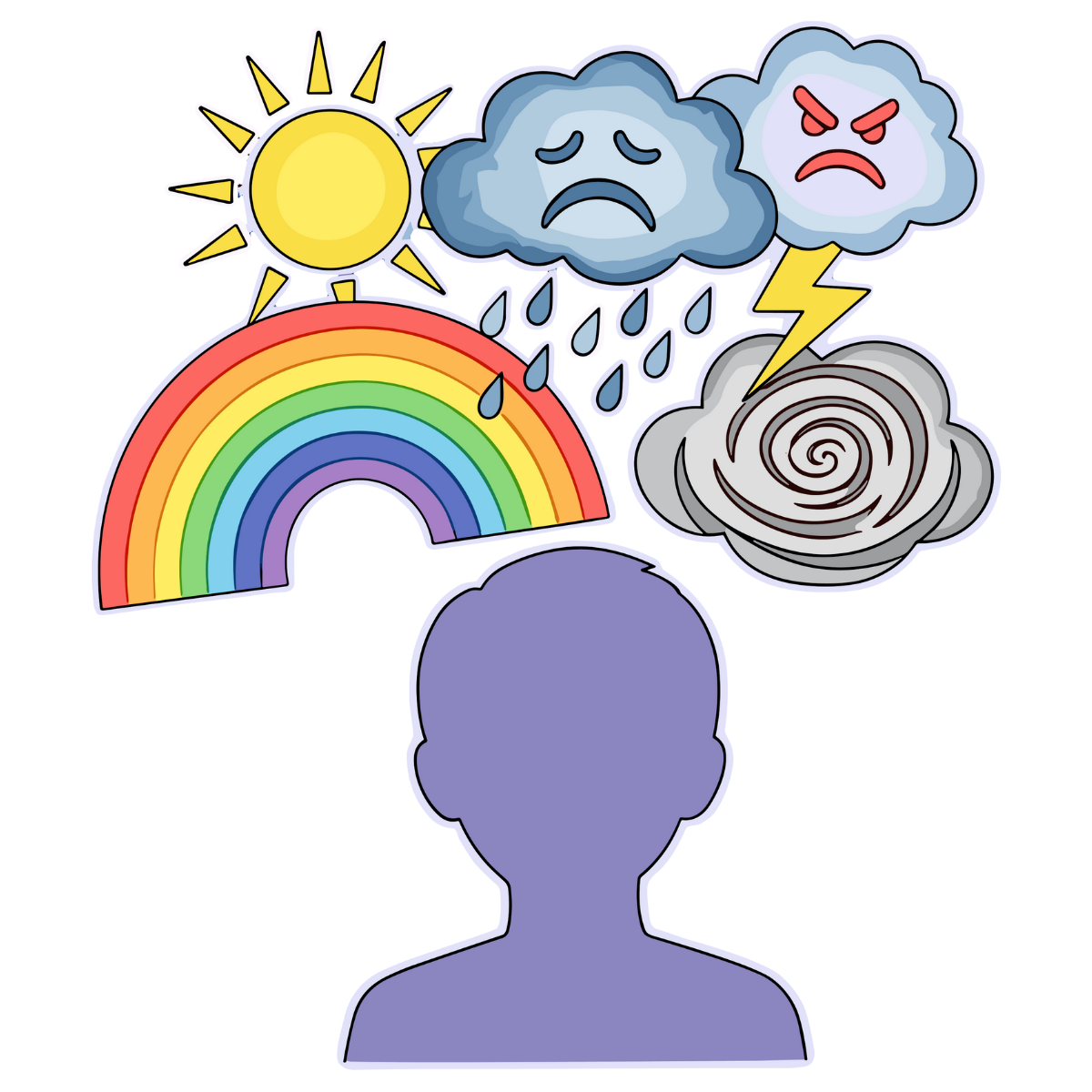
Mindfulness of Thoughts & Emotions
Mindfulness of Thoughts & Emotions shines the light of conscious attention back onto the mind itself. Rather than treating thoughts and feelings as distractions, this mindfulness practice invites them to take center stage. Precisely because people look to mindfulness as a way or managing distracting or disturbing thoughts and feelings, it can help to begin with another focal point that feels safe, stable, and easily accessible to use as an anchor or what we call a “home base.” This can be Mindfulness of Sound, breathing, or specific sensations, or it can be anything you or a student identify with as supportive. Students should know they can come back to home base at any time, and for any reason.
We often begin an experience of Mindfulness of Thoughts & Emotions by investigating and exploring the movements of the mind as they happen, trying to bring focused and curious attention to thoughts and feelings in the moment. This often takes the form of asking questions about the nature of thought – whether is comes with words or images – or if and where an emotion is felt physically within the body. There’s no expectation that all or any of these questions have answers, we’re simply trying to see the experience of thoughts and feelings as they are “zooming in” on specific aspects of the situation.
As the nature of thoughts and emotions emerges in more detail, we finally relax the effort of investigating or zooming in on what’s happening, and make space for the thoughts and feelings to unfold in their own pace as a whole experience, rather than trying to isolate its pieces and parts. Rather than putting attention at a distance from thoughts and emotions, this broader mindful awareness is meant to embrace all the aspects of thoughts and feelings, and to receive them as they come with openness and awareness.

May reduce stress and supports emotional regulation
Improves focus, attention, and self-control
Builds self-awareness and mindfulness
Supports mental and emotional well-being
Enhances coping skills and resilience
Instructions:
1. Sitting in a chair or on the floor, find a comfortable posture that feels relaxed and alert, noticing how you adjust to find this feeling. Rest your hands on your knees or in your lap, and either close your eyes or settle your focus somewhere in the room. Take a few deep breathes, letting go of tension throughout the body.
2. Begin by brining mindful attention to something that feels easy and accessible, such as sounds happening in the room, or a specific sensation in the body. Know you can return to this “home base” any time you choose throughout the practice.
3. When you are ready bring your attention to the pattern of thoughts and emotions arising and passing through in this moment. See if you can become curious about the patterns of the mind without trying to fix or change what you find right now, and begin to explore the experience of thinking and feeling.
4. See if you can find the first moment when you become aware of a thought or a feeling – are you aware of it arising, or does it feel like it was there before your attention found it, or do you become aware only as it fades?
5. When a thought or feeling is present how do you know it is there? Does it come with language? Images? Do you feel it an any part of your body?
6. What kind of reactions and impulses arise when attention meets this thought or feeling? Is there a sense of wanting to push it away, or hang onto it? If it feels okay, can you acknowledge any impulses to chance what’s happening while allowing this experience to be just like it is. Any time you sense a thought or feeling overwhelming, or carrying away your awareness, return to your “home base,” or just take a few moments’’ pause.
7. As if mindful awareness could expand to encompass the entire experience, notice, in real time, all the things that connect to or ripple out from a single thought or emotions- images, words, sensation, memories, wants, even other thoughts and emotions. Feel where you can relax and be with what’s happening, allowing the experience to unfold.
8. To finish, take a deep inhale and let it go with an effortless exhale. Allow your attention to travel freely back to your “home base” or whatever you feel it needs to go right now, noticing how you feel after this mindful experience.

Get comfortable and breathe.
Sit comfortably, rest your hands, and take a few slow breaths to help your body relax.
2. Find your “home base.”
Choose something easy to focus on—like a sound in the room or how your body feels. You can come back to this anytime.
3. Notice thoughts and feelings.
Gently notice thoughts or feelings as they show up. You don’t have to change them—just notice and be curious.
4. Come back and finish.
If things feel too big, return to your home base or take a pause. When you’re done, take a deep breath, stretch, and notice how you feel.
Teaching Cues for Students
Implementation & Development
See our Child Development Page for more information to help tailor your instruction to best meet the needs of your students.
All children learn best given clear, concise, instructions, trying to reduce directional cues down to 4 steps.
Enjoys learning through games, songs, and stories. Cues for Balloon Breath can be incorporated into a song or a rhyme to make it more playful.
Keep it very short and concrete (30–60 seconds).
Use simple language like “thoughts come and go.”
Focus on noticing, not naming or explaining feelings.
Offer a safe home base (breath, sound, hands).
Avoid deep emotional discussion—observing is enough.
Still enjoy routine, learning through games, group activity.
Keep guidance brief and structured (1–3 minutes).
Teach thoughts and feelings as things we notice, not things we are.
Normalize mind-wandering and big feelings.
Offer choice to return to a home base at any time.
Use drawing or symbols instead of verbal processing.
As adolescence begins and continues, students will start to feel preoccupied with body image. It is important to cultivate a safe space for students to practice the Balloon Breath where they don’t feel singled out and they have the option to close their eyes or to soften their gaze.
Use respectful, non-sentimental language.
Emphasize choice and autonomy at all times.
Allow neutral or self-focused phrases if others feel hard.
Keep practice optional and non-performative.
Connect kindness to stress regulation and boundaries, not obligation.


Video
Helpful Hints
Never overdo any breathing exercise or force your breath into a pattern that is uncomfortable. If you begin to feel anxious or lightheaded, stop practicing and breathe normally.
Practice with self-compassion.
Mindfulness of Thoughts and Emotions can be done from a seated, standing, or reclining position.
Content from NYCDOE YMTP² curricular materials