

Yoga Practice (Posture):
Chair Pose
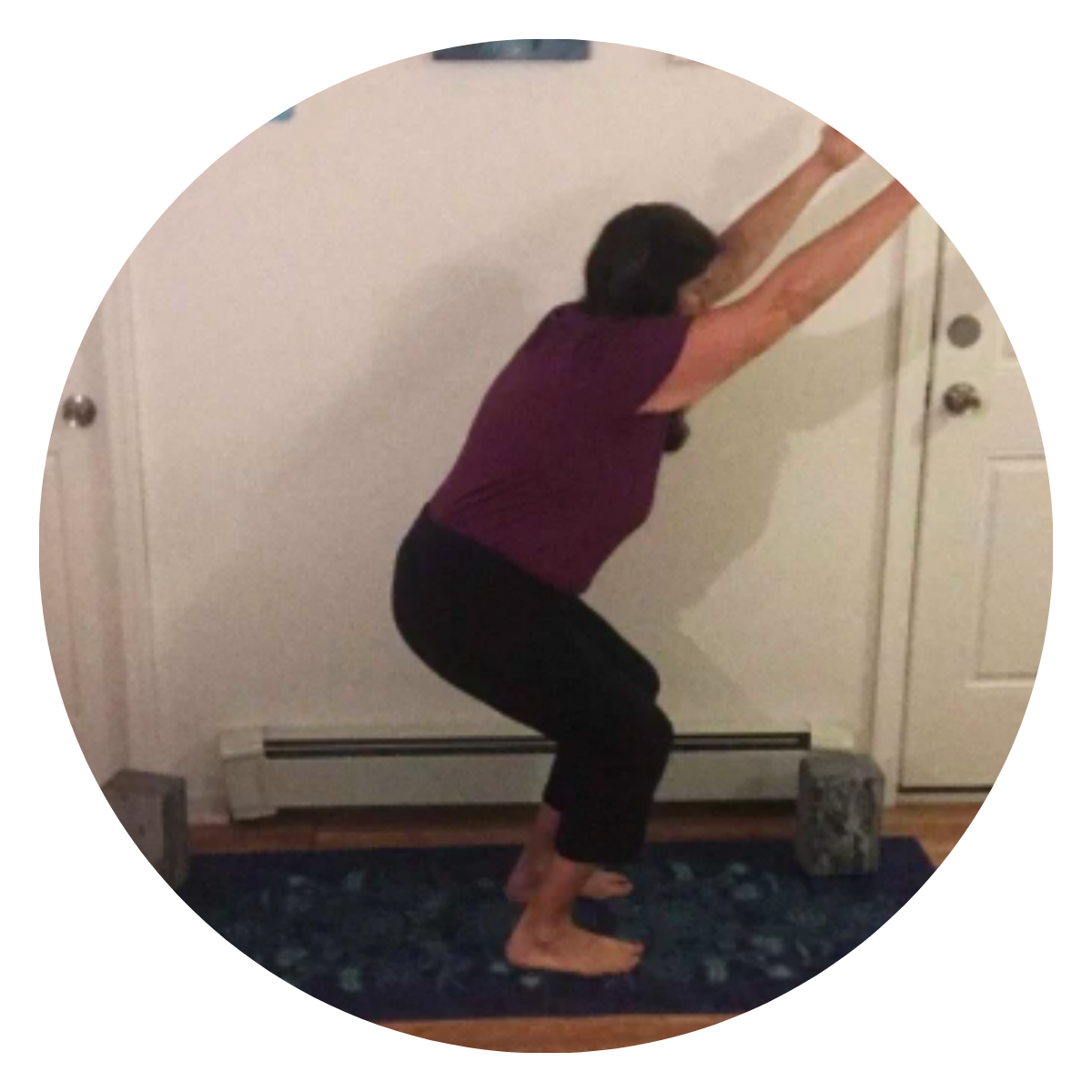
Chair Pose
The Chair Pose is a yoga posture that has the potential to strengthen the muscles of the legs, seat, abdomen, back and shoulders. This pose can also stabilize the ankles, knees, hips, and spine and can cultivate strength and endurance.
With relatively little stretching involved, but a great deal of potential strengthening, students often experience. Chair Pose as an endurance contest, counting the seconds on the clock until it’s over. In Sanskrit, this pose is utkatasana. Its root word, utkata, does not mean chair but “extraordinary” or “beyond the norm.” And one definition of the suffix asana is “seat” or “sitting with.” In that light, one way of thinking about utkatasana is learning to sit with sensations that are extraordinary. Rather than looking for maximum challenge until collapsing or giving up, encourage students to consciously and continually adjust the posture so that they sit with and focus deeply on the sensations in the body. By adjusting this posture, they can build a structure with sensations strong enough to gather attention, but moderate enough to sustain it. Practicing in this way builds awareness, discernment, and agency.

Strengthening muscles of the legs, seat, abdomen, back and shoulders.
Stabilizes ankles, knees, hips, and spine.
Fosters focus and concentration
May boost confidence by practicing strength and perseverance
Instructions:
1.From Mountain Pose, bend your knees and sit your hips back and down, keeping feet parallel and hip-width apart.
2. Engage the legs to sustain balanced space in the ankles, knees and hips, taking care not to let the knees drift too far forward.
3. Reach your arms up overhead, turning the palms to face one another, allowing the shoulder blades to spread and rotate upward. For less intensity, brace the hands on top of the thighs to support the torso.
4. Keep the spine stabilized by gathering and engaging the abdominal muscles while reaching back and down through the tail, and lifting and reaching forward through the sternum and the top of the head.
5. To release, press with the legs and lift through the top of the head to stand. Lower the arms and return to Mountain Pose. Rest and integrate.
Stand tall, then bend your knees like you’re sitting in an invisible chair.
Keep your feet strong on the floor and your knees pointing forward.
Reach your arms up to the sky (or place your hands on your thighs if that feels better).
Hold and breathe, then stand back up tall and relax your arms. Inhale to stand up tall. Notice how you feel.
Teaching Cues for Students
Implementation & Development
See our Child Development Page for more information to help tailor your instruction to best meet the needs of your students.
All children learn best given clear, concise, instructions, trying to reduce directional cues down to 4 steps.
Enjoys learning through games, songs, and stories. Cues for Balloon Breath can be incorporated into a song or a rhyme to make it more playful.
Focus: play, gross motor strength, confidence
Use playful imagery:
“Sit in an invisible chair”
“Get ready to sit… then stand!”
Keep the bend small and brief.
Arms can reach up, out, or rest on thighs.
Count 2–3 breaths, then stand.
Emphasize strong feet “glued to the floor.”
Celebrate effort, not stillness.
End with a shake-out or stretch.
Still enjoy routine, learning through games, group activity. Appreciates praise and being noticed. Slightly longer attention spans, may be able to take in more instructions and longer practices.
Focus: strength, posture, body awareness
Cue posture first: chest lifted, knees forward.
Emphasize knees tracking over feet, not collapsing in.
Offer arm choices: overhead or hands on thighs.
Pair breath: inhale to rise, exhale to bend.
Hold for 3–5 breaths at a comfortable depth.
Encourage noticing leg strength and steadiness.
As adolescence begins and continues, students will start to feel preoccupied with body image. It is important to cultivate a safe space for students to practice where they don’t feel singled out and they have the option to close their eyes or to soften their gaze.
Focus: empowerment, autonomy, regulation
Frame as a strength-building and grounding pose.
Encourage students to choose depth and duration.
Emphasize even weight through both feet.
Normalize micro-bends or standing up early.
Pair breath with effort (exhale while holding).
Invite reflection: “Notice your energy or focus after.”


Precautions
Sensitive or weak knees: practice with care and moderation; use repetition to strengthen
Heart or circulatory conditions: practice with care and moderation; avoid long holds
Avoid or practice with caution with recent surgery or acute injury to any key muscles or joints
Avoid or practice with caution with chronic or recent injury, pain, or inflammation to any key muscles or joints
Helpful Hints
Never overdo or force any yoga movement. If you begin to experience discomfort or pain, release the posture. Find a variation of the posture that serves your body and practice best.
Practice with self-compassion and non-judgement.
Chair pose can be done standing or using a chair as a prop.
Universal Best Practices
Pain-free range only; depth is optional.
Knees point forward; heels stay grounded.
Arms are always optional.
Encourage stepping out without explanation.
End by standing tall to reset posture and breath.
Content from NYCDOE YMTP² curricular materials