

Yoga Practice (Warm-Up):
6 Movements of the Spine
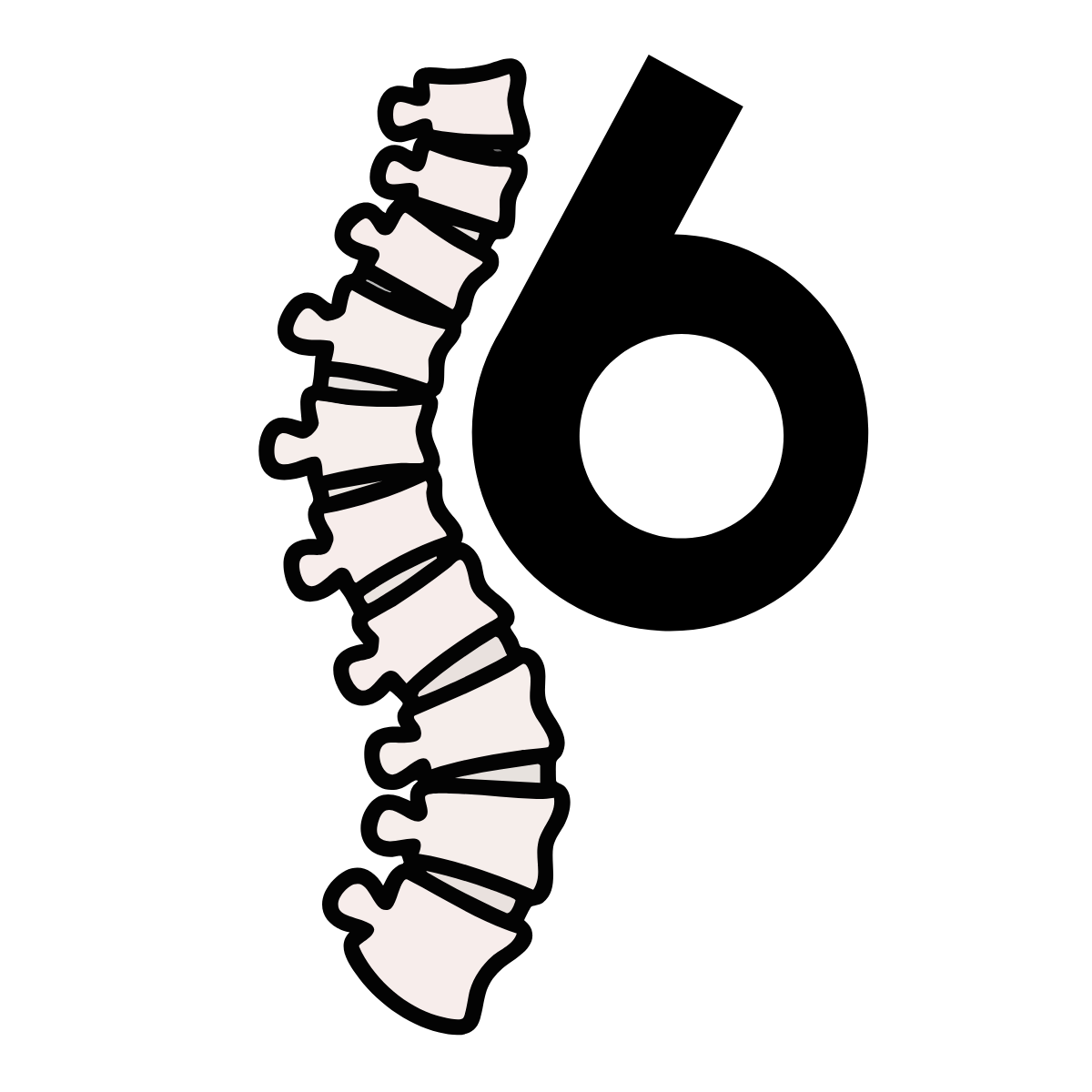
6 Movements of the Spine
The 6 Movements of the Spine yoga warm-up sequence allows the spinal joints to move through fundamental movements of flexion, extension, lateral flexion, and rotation. These yoga movements engage and relax all of the supporting muscles of the spine and activates and relaxes accessory breathing muscles.

Builds awareness of body sensations (interoception)
Supports emotional regulation and nervous system calming
Reduces stress and physical tension
Increases ability to notice early signs of overwhelm
Encourages acceptance of internal experiences without judgment
Can help decrease emotional reactivity and discomfort over time
Instructions:
1. Lying on the floor or sitting in a chair, find a comfortable posture that feels relaxed and alert, noticing how you adjust to find this feeling. Close your eyes or soften your gaze.
2. Feel all the places in your body supported by the floor, the cushion, or your chair. Take a few deep breathes, letting go of tension throughout the body wherever you are relaxing into these places of contact and support. Then allow your breath to breathe at its own natural, effortless pace.
3. Bringing awareness into the body, begin to notice whatever sensations draw your attention. You may become aware of a variety of sensations - coolness or warmth, pressure or pulsation, tingling or itchiness, comfort or discomfort. And there may be places where you feel nothing at all. Invite the mind to become curious about the sensations arising, and as best you can, let them be just as they are.
4. Now bring your attention into the feet. Feel your feet up to your ankles, allowing yourself to adjust and relax the feet wherever you can. Then bring attention to the soles of the feet, noticing wherever sensations are present and accepting them as they are. Feel the tops of the feet, then the turn of the ankle, noticing sensations of tingling, pulsation, warmth or coolness, or the absence of sensation. Notice any emotions, images, or stories that arise as you bring awareness to each part of the foot. Now again, feel the entirety of the foot and ankle, bringing curious attention to the area of the body, as if you were feeling it for the first time.
5. Repeat for the shin up to the knee. Then the thigh up to the hip.
6. Repeat for the pelvis up into the belly. Then the ribs into the chest.
7. Repeat for the shoulder and upper arm. Then the elbow and the forearm. Then the wrist and the hand.
8. Repeat for the neck and head, as well as the features of the face.
9. Finally, as you breathe in and out, let go of any intention to focus on specific places or parts of the body and return awareness to the body as a whole. Feel the places of contact and support, and the entire body breathing in and out. Allow sensations to arise and pass at their own pace, being present to whatever sensations, thoughts and feelings come.
10. To transition, take a deep breath and let it go. Begin to move and stretch the body in any way that feels intuitive or enjoyable to you right now. Gradually, bring your awareness back to the space around you, and the thoughts of the day, returning when you feel ready.

Get comfortable
Sit or lie down in a way that feels calm and awake. Close your eyes or look softly.Feel your body being held.
Notice where your body touches the floor or chair. Take a few slow breaths and let your body relax.Notice body feelingsPay attention to how your body feels—warm, cool, tingly, tight, heavy, or maybe nothing at all. There’s no right or wrong.
Scan and finish.
Slowly notice your body from feet to head. When you’re done, take a big breath, stretch, and come back when you’re ready.
Teaching Cues for Students
Implementation & Development
See our Child Development Page for more information to help tailor your instruction to best meet the needs of your students.
All children learn best given clear, concise, instructions, trying to reduce directional cues down to 4 steps.
Enjoys learning through games, songs, and stories. Cues for Balloon Breath can be incorporated into a song or a rhyme to make it more playful.
Keep it very short (30–60 seconds).
Use simple, concrete language (“Notice your feet, your belly, your hands”).
Focus on sensation, not emotions or thoughts.
Encourage movement or wiggles if stillness is hard.
Use a fun “home base” like a stuffed animal or hand on heart.
Still enjoy routine, learning through games, group activity.
Keep sessions brief and structured (1–3 minutes).
Explain that noticing the body can help us feel calm.
Normalize mind wandering and gently guide attention back.
Offer choice in focus (feet, hands, belly, or head).
Pair with short reflection or drawing if helpful.
As adolescence begins and continues, students will start to feel preoccupied with body image. It is important to cultivate a safe space for students to practice the Balloon Breath where they don’t feel singled out and they have the option to close their eyes or to soften their gaze.
Use neutral, respectful language; avoid “relax” as a command.
Emphasize choice, privacy, and autonomy.
Frame body awareness as a skill for calm and focus, not performance.
Normalize distraction and changing sensations.
Can integrate with breath or emotion check-ins for self-regulation.


Videos
Mindfulness of Sensation (Body Scan)
Mindfulness of Sensation (Body Scan) For Kids
Helpful Hints
Never overdo any breathing exercise or force your breath into a pattern that is uncomfortable. If you begin to feel anxious or lightheaded, stop practicing and breathe normally.
Practice with self-compassion.
The Body Scan can be done from a seated, standing, or reclining position.
Content from NYCDOE YMTP² curricular materials