

Yoga Practice (Posture):
Balancing Stick Pose
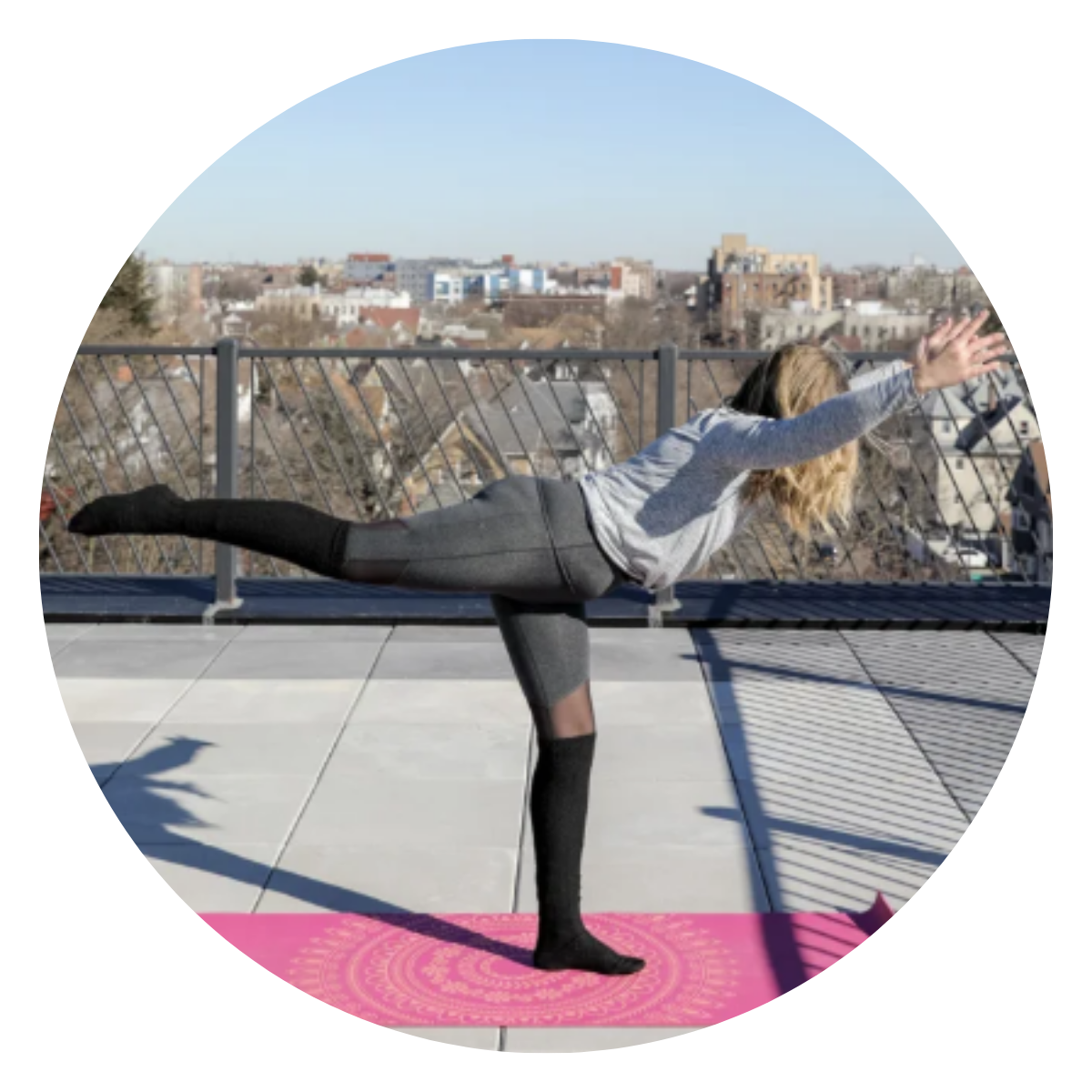
Balancing Stick Pose
The Balancing Stick Pose, or Warrior 3, engages the muscles of the standing leg to stabilize the ankle, knee, and hip and maintain equilibrium, the abdominal and spinal muscles to support the spine and trunk, and the standing hip flexes.

Strengthens the muscles of the ankle, leg, lip and back
Mobilizes the hip joint
Stretches the hamstring muscles
Fosters focus and concentration
Improves balance
Instructions:
From Mountain Pose, reach your arms wide to the side and overhead.
Lengthen from the tail and the heels reaching down through the top of the head, arms reaching up.
Shift weight to the right side until the left leg is free to lift. Slowly tilt the pelvis forward only as far as you choose, while still sustaining the length and support from the head to the tail to the left heel behind you. Pause if you feel the lifted body has become level with the floor.
To release, slowly rise up and return the left foot to the floor. Bring the arms down by your side to Mountain Pose.
Stand tall like a mountain. Reach your arms out wide and then up to the sky.
Lean forward slowly and lift one leg straight back like a stick.
Stretch long from your fingers to your toes, trying to make your body like one straight line.
Come back up gently, lower your foot to the floor, and stand tall again.
Teaching Cues for Students
Implementation & Development
See our Child Development Page for more information to help tailor your instruction to best meet the needs of your students.
All children learn best given clear, concise, instructions, trying to reduce directional cues down to 4 steps.
Enjoys learning through games, songs, and stories. Cues for Balloon Breath can be incorporated into a song or a rhyme to make it more playful.
Focus: play, balance exploration, safety
Keep it very simple: arms out like airplane wings.
Lift the back foot just a little (toes can stay low or lightly touching).
Use imagery:
“Airplane taking off”
“Flying straight and strong”
Encourage looking at a spot on the wall for balance.
Hold for 1–2 breaths, then switch.
Normalize wobbling and stepping down anytime.
End by standing still and noticing both feet on the floor.
Still enjoy routine, learning through games, group activity. Appreciates praise and being noticed. Slightly longer attention spans, may be able to take in more instructions and longer practices.
Focus: coordination, strength, body awareness
Cue length first: “Grow tall before you tip.”
Emphasize slow weight shift, not rushing into the pose.
Arms can be wings or reaching overhead — student choice.
Encourage a flat back only as far as feels steady.
Use breath cues (inhale to grow, exhale to hinge).
Pause briefly, then switch sides evenly.
Invite noticing what helped balance (focus, breath, arms).
As adolescence begins and continues, students will start to feel preoccupied with body image. It is important to cultivate a safe space for students to practice where they don’t feel singled out and they have the option to close their eyes or to soften their gaze.
Focus: self-regulation, strength, autonomy
Frame as a balance, focus, and core-engagement pose.
Emphasize alignment over depth; level with the floor is optional.
Encourage students to choose arm position and depth.
Normalize using a wall, chair, or micro-bend in the standing leg.
Invite awareness of effort vs. ease.
Hold for a few steady breaths, then transition mindfully.
Pause afterward to notice grounding and steadiness.


Images
Essential Principles
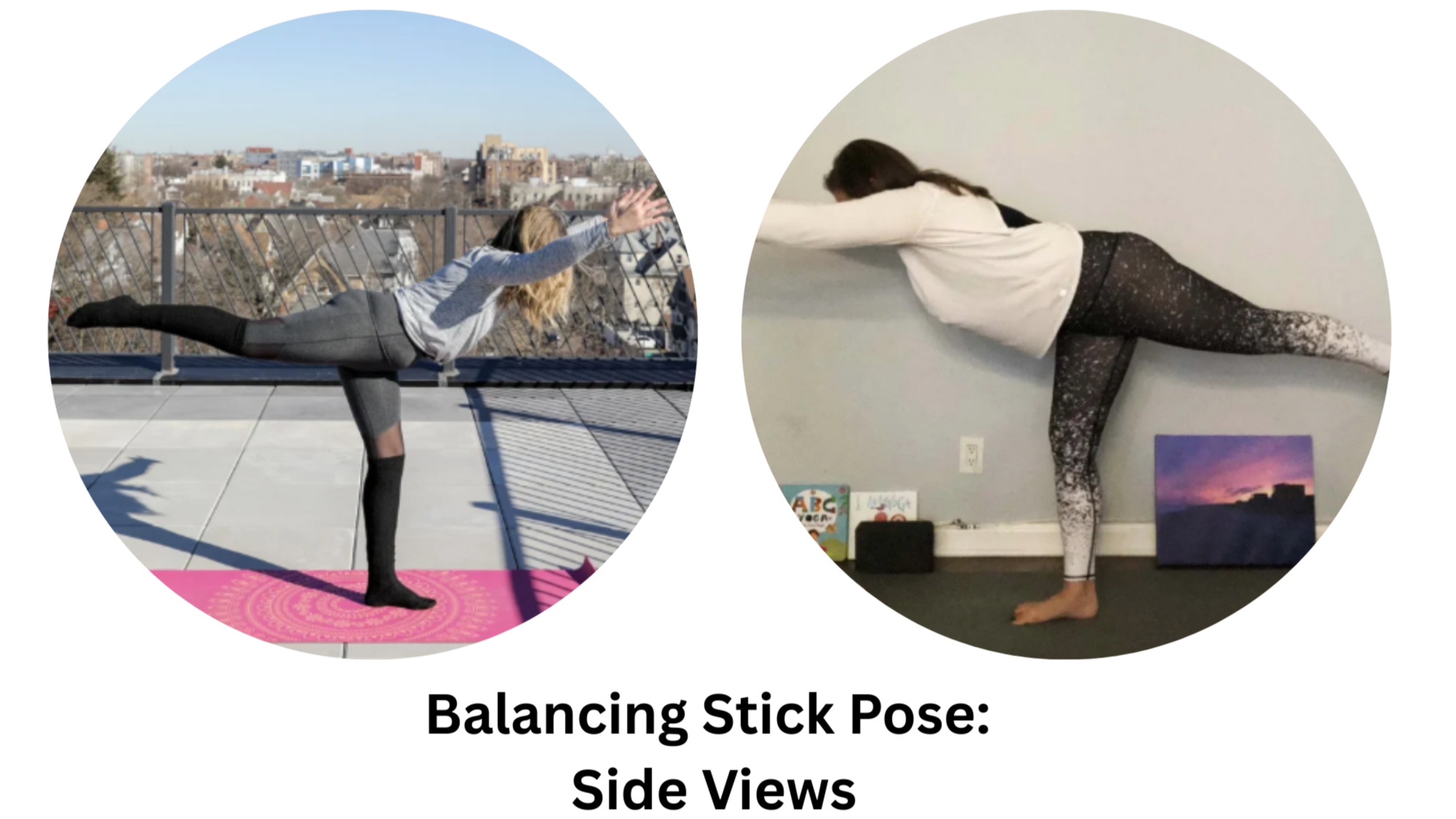
As a proprioceptive exercise of feeling the body in space, Balancing Stick Pose is more about finding and feeling the length and stability of the lifted body than it is about getting the body level with the floor. If students rush to level the body with the floor, the torso and lifted leg will often drop or drift and break the line from head to hips to heel. Supporting a hand on the back of the chair or on the edge of a desk can moderate the challenge of balance and allow more focus on the internal alignment of the body. Encourage students to explore the spectrum of sensation slowly and prioritize focus on the body in relationship to the body rather than the body in relationship to the floor.
Options
To reduce the challenge of balancing and articulation of the standing hip, place a hand on the back of a chair or the edge of a desk and don’t tilt as far into this posture
To facilitate balance and decrease the intensity for the back-body musculature, spread the arms wider to the sides or place the hands on tall blocks directly beneath your shoulders.
To facilitate awareness of the body in space, bring your hands to your hips so you can feel what you’re doing as you move through the pose.
Universal Best Practices
Balance poses are optional and choice-based.
Smaller movement = more stability.
Encourage stepping down anytime without explanation.
Avoid forcing or locking the standing knee.
End by returning to Mountain Pose to reset and ground.
Content from NYCDOE YMTP² curricular materials
Precautions
Sensitive knees or hips: practice with care and moderation: use a wall or the edge of a desk or chair to improve stability and reduce the angle of hip articulation.
Vestibular or proprioceptive issues: practice with care and moderation: use a wall or the edge of a desk to improve stability
Avoid or practice with caution with recent surgery or acute injury to any key muscles or joints
Avoid or practice with caution with chronic or recent injury, pain, or inflammation to any key muscles or joints