

Yoga Practice (Warm-Up):
Ankle Rolls
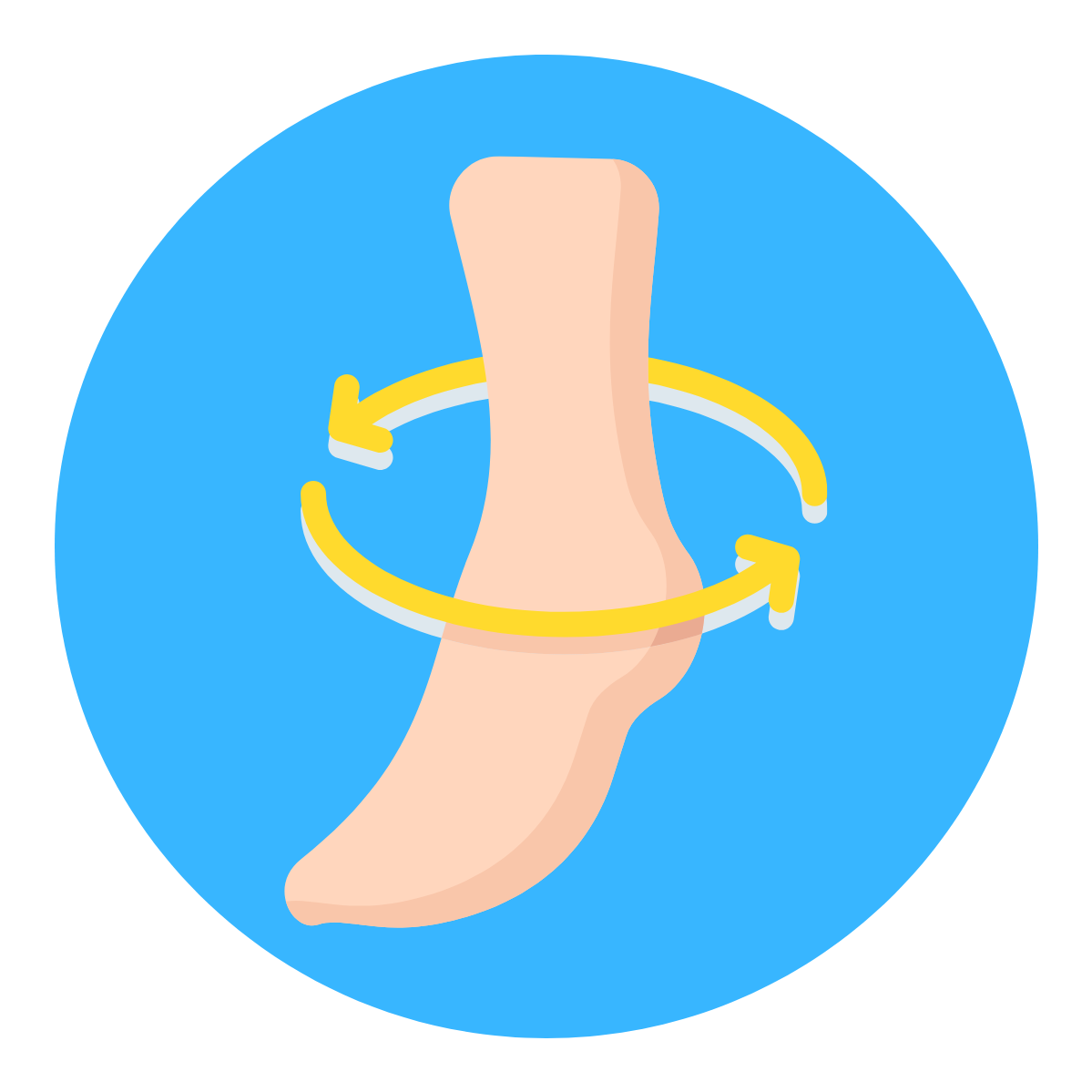
Ankle Rolls
Ankle Rolls are a yoga warm up that help to mobilize the ankle joint and engage and lengthen calf and shin musculature.

Increases ankle mobility and joint range of motion
Improves balance and body awareness
Gently warms up the lower legs and feet
Supports circulation and reduces stiffness
Helps prepare the body for standing or movement activities
Instructions:
From a seated or standing position, extend your right leg so that the foot and ankle are in a position to move freely. Begin circling the foot at the ankle, repeating several times and gradually expanding the movement to explore your range of comfort.
Reverse directions and continue circling. Then return the leg to its original position and pause before switching sides.
Get ready.
Sit or stand and lift one foot off the floor.
2. Make circles.
Gently circle your foot around your ankle a few times.
3. Go the other way.
Switch directions and make circles the opposite way.
4. Switch feet.
Put your foot down, pause, then try the other side.
Teaching Cues for Students
Implementation & Development
See our Child Development Page for more information to help tailor your instruction to best meet the needs of your students.
All children learn best given clear, concise, instructions, trying to reduce directional cues down to 4 steps.
Enjoys learning through games, songs, and stories. Cues for Balloon Breath can be incorporated into a song or a rhyme to make it more playful.
Offer seated as the default option; standing is optional.
Use playful imagery:
“Draw circles with your toes”
“Stir the soup with your foot”
Keep circles small and slow; model clearly.
Use simple breath cues (“Breathe in… breathe out”) without over-instruction.
Count together (3–5 circles each way).
Normalize resting the foot down at any time.
Pause briefly after each side to feel the foot on the floor.
Still enjoy routine, learning through games, group activity. Appreciates praise and being noticed. Slightly longer attention spans, may be able to take in more instructions and longer practices.
Offer seated or standing options; invite choice.
Encourage smooth, controlled circles rather than speed.
Cue awareness: “Notice how the ankle feels in each direction.”
Guide students to expand the circle gradually within comfort.
Use directional language (clockwise/counterclockwise).
Include a clear pause between sides for grounding.
As adolescence begins and continues, students will start to feel preoccupied with body image. It is important to cultivate a safe space for students to practice where they don’t feel singled out and they have the option to close their eyes or to soften their gaze.
Frame ankle rolls as a warm-up, grounding tool, or stress reset.
Emphasize range of motion without forcing or pain.
Invite students to explore quality of movement (smooth vs. sticky).
Offer standing balance as optional; seated is always available.
Encourage noticing asymmetry between sides without judgment.
Pause intentionally after each side to notice stability and contact.


Helpful Hints
To support your balance during Ankle Rolls, hold the back of a chair or the edge of a desk.
Never overdo or force any yoga movement. If you begin to experience discomfort or pain, release the posture. Find a variation of the posture that serves your body and practice best.
Practice with self-compassion and non-judgement.
Ankle Rolls can be done standing, sitting in a chair.
Universal Best Practices
Always offer seated, standing, or skipping as valid choices.
Avoid rushing—slow, mindful movement supports nervous system regulation.
Emphasize comfort over flexibility.
Keep cues invitational, not corrective.
End with a brief grounding moment: “Feel both feet connected to the floor”
Content from NYCDOE YMTP² curricular materials